
Prejudices in children

Children are like a sponge that absorbs attitudes, traditions, teachings but also learn from feelings, especially from the mother's attitude, because in general it is more united and related to it from the womb to the first years of life.
Even the first approach of children with rejection comes precisely from the mother, because as long as the rejection is greater, older may impact prejudice in children and their behavior later in life and in their growth stages.
Research has revealed that the prejudices that children have in relation to people can be observed in minors from the preschool stage to even the adult stage.
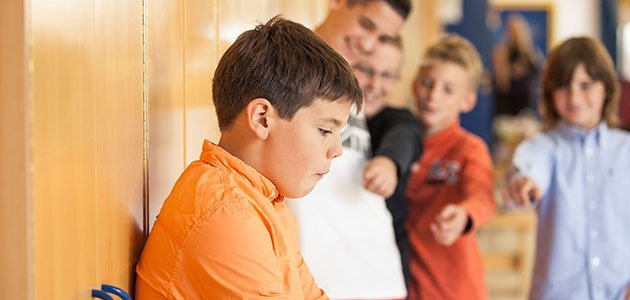
Some of the most common prejudices is overweight for example, children who suffer from either habit or illness “fat” are teased at school, and children grow up with the prejudice of relating a person if not obese, with more weight as someone "ugly, little graceful, not acceptable in society ”because, from the beginning children are taught a stereotype of beauty and that it must have certain characteristics to be accepted.

Skin color, white or brown is also another common prejudice, as many parents or families believe that brown skin represents a non-pure race, but we must bear in mind that at historical levels we cannot claim to be a pure breed, because as a result of miscegenation, and of the different visitors from other countries of the world who have settled in ours there has been a mixture not only of race but of cultures, principles and customs, that even each one, it's a different world with totally different prejudices.
It has been discovered that, In general, prejudices mainly come from the mother's side according to ** Ted Ruffman from Otago and lead author of the study published in Journal of Experimental Child Psychology.** Which in synthesis tells us that, the prejudice is born before the attitude of the mother with certain characteristics such as overweight, the religion, the skin that manifests in an open way to your child in relation to the specific topic.
According to these investigations, who used a questionnaire in which they evaluated the prejudice of women towards excess weight, a questionnaire of children from among the 11 Y 32 months of life with photographs of people who have extra weight and others who do not, covering their faces with the firm intention that the child pay attention only to the appearance of the bodies. Sadly, children who were barely one year old looked at photos with people of extra weight, proving that maternal influence and excessive television consumption is the main influence of the minor, as well as the education they receive in relation to the subject and that play a crucial role in the context, because the mother is the main reference of any child, are they the absolute truth wrong or not.
In the case of gender biases, we have a lot of fabric to cut from, for example, we have in theory defined that pink is for girls like blue for boys… this is something that, although it is not written, society has intended as a way to differentiate what is acceptable for each sex, the same happens with sports, the arts, Dance. For example: The one that soccer is not for girls, what is a sport for children, that mechanics and cars is a man's thing, when there are sports girls who like soccer, that can be good within your physique and qualities, as well as learning about automobiles as a man can learn about cooking.
That dance is only for women, when there are incredible male dancers, with this the case of Billy Elliot comes to mind, in the case of ballet, It is very common for its elegance and delicacy to think that it is only for girls, and that if a child practices it, he can "learn tricks", which is a lie because dance has nothing to do with gender preference aspects.
But this type of prejudice is learned from childhood in all homes and families, It would be a lie to say that in our homes there is no kind of prejudice linked to customs, family visions, etc.
Research says that among 3 Y 4 years, children prefer to be accompanied by others of the same sex, states Professor Andreas Beelmann of the Friedrich Schiller University of Jena Germany, where he talks about a normal personality development where he says that, the problem of an evaluation of a social group begins when in the formation of identity the objective is reversed in the prejudices and discrimination of one against the other.
Precisely to prevent this from happening, the psychologist has worked on a child prevention program that was designed to reduce prejudice and promote tolerance towards other people from childhood. According to their studies, prejudice increases steadily between preschool age and has a peak level among the 5 Y 7 years, decreasing with increasing age, reflecting normal cognitive development in children. This happens because at the beginning the child adopts the prejudices of his family environment, Well that's where you start to create your social beliefs, But in the end, when he grows up and knows other environments, it gives him the facility to differentiate and evaluate the different stereotypes by creating his own criteria..
Then, psychologists at the age when prejudices begin to diminish is the ideal age to start the prevention program, since this must be compatible with the normal course of its development says Beelmann. According to their studies during primary school, prejudices decrease, because they have access to coexistence with children of different customs and even nationalities.
In addition, according to their studies, it is said that social ideas and prejudices are formed in a particular and different way in children who make up social minorities, Well, they do not have a negative attitude speaking of majorities, being in many cases something positive. The reason for this is that, is the highest social status of the majority is considered the role model, and then after discrimination then another prejudice develops, so prevention according to Beelmann should start before they reach these points.
In summary, The results of the new studies carried out by this German psychologist do not imply that children and the attitudes of young people towards certain social groups, beliefs, ideologies, religions and cultures cannot change in later stages. But they depend a lot on individual development and how tolerance has been sown based on respect in their daily lives..
The child over time can be able to identify when a concept is generalized and in turn differentiate between being tolerant and discriminating following another social sector, concludes.
References: scientificamerican.com
Education and prejudices – Metanoia
13 of March of 2023 at 10:41[…] Prejudices in children begin in the first stages of life. Fountain: Edison College […]